Castello Sforzesco
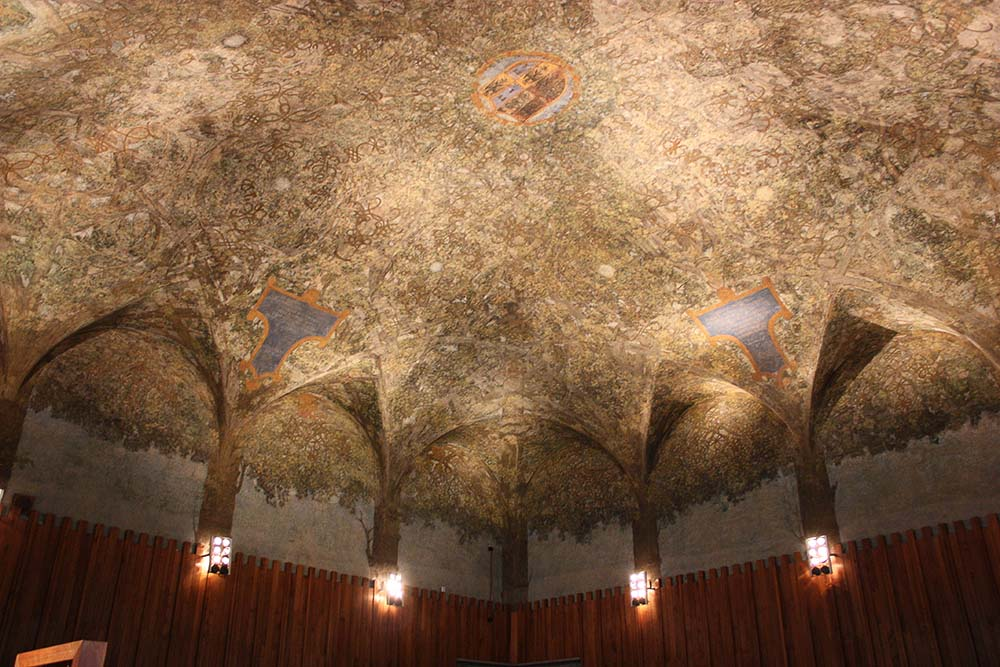
Sforza Castle, built in 1450, was once the residence of the Sforza family, and is now an important national museum in Milan. It has 18 venues, including art galleries, Egyptian Archaeological Museum, and Ancient Art Museum. Important collections include Michelangelo’s last sculpture, “Rondanini Piet à”, and Leonardo da Vinci’s Codex Trivulzianus manuscript.
After Milan was defeated by France in the Battle of Mariniano in 1515, Sforza Castle was used as a weapons warehouse; During Spanish rule, the castle was used as a fortress.
Until the unification of Italy in the 19th century, Sforza Castle was no longer used for military purposes, but was owned by Milan. The Milan government repaired the castle and rebuilt the central tower of the castle from 1900 to 1905 as a monument to the Italian King Umberto I.
During World War II, Milan was bombed by the Allies and the castle was seriously damaged. After the end of World War II, Milan BBPR Architecture Office has comprehensively renovated the castle as a museum. At present, there are 18 venues including art galleries, Egyptian Archaeological Museum, and Ancient Art Museum.
Exhibition halls and collections:
The “Pinacoteca” was built in 1878. There are more than 1500 paintings in the museum, including the works of Titian, Canaletto, Giovanni Bellini, Tintoretto and other painters. The gallery divides the exhibition area into two parts. The first part displays religious paintings from the 15th to the 16th century, the second part displays paintings from the 16th to the 18th century, and some portraits of Sforza family members are also displayed in the gallery.
The “Museum of Egyptian Archaeology – Sezione Egizia” has about 3000 exhibits, which are divided into five parts for display, including the history of Mediolanum established in the 4th century BC (now Milan); Art of Gandhara collected in Milan; Early Middle Ages; Etruscan civilization part; The ancient Greek part also has a temporary exhibition hall.
The Museo d’Arte Antica mainly collects and displays sculpture works from the Late Antiquity, the Middle Ages and the Renaissance. Important exhibits include Michelangelo’s sculpture “Rodanini Piet à” completed in 1564. In addition, the museum also exhibits two medieval gates, some funerary objects, a weapons showroom and a tapestry showroom.
Located on the first floor of the castle, the Museo dei Mobili e delle Sculture Lignee focuses on the history of furniture development in Italy and Lombardy from the 14th century to the present. Important exhibits include Passalacqua cabinets, Nicodemus wood carvings, and storage boxes engraved with the scene of the wedding of the three dukes.
The Museo degli Strumenti Musicali lists more than 700 musical instruments from the 15th to the 20th century, including double harpsichord, plucked instrument, Lombardy violin, oboe, clarinet, piano, etc. In 2000, the museum received 79 musical instruments collected by the Monzino family of Milan musical instruments, most of which were produced in the 18th to 20th centuries, presenting the superb skills of the Lombardy stringed instrument makers at that time.
In addition to the above five exhibition halls, Sforza Castle also has 18 exhibition halls, including Prehistoric and Early Historical Archaeology Museum, Coin and Medal Museum, Decorative Art Museum, Achille Bertarelli Printmaking Collection Hall, Painting Manuscript Theme Hall, Photo Collection Hall, and Historical Archives Hall.

- admin
- Castello Sforzesco 9 11 月, 2022
- Milan Cathedral Street Food 8 11 月, 2022
- Milan Cathedral Tour II 8 11 月, 2022
- Milan Cathedral Tour I 8 11 月, 2022
- Niagara Falls: The four most beautiful tours 2 11 月, 2022